
China and US Agree to Cut Tariffs for 90 Days
Meta Description:
China and the US have agreed to reduce tariffs for 90 days in a move that could ease global trade tensions. Learn what this agreement means, how it affects markets, and what comes next.
📌 Introduction
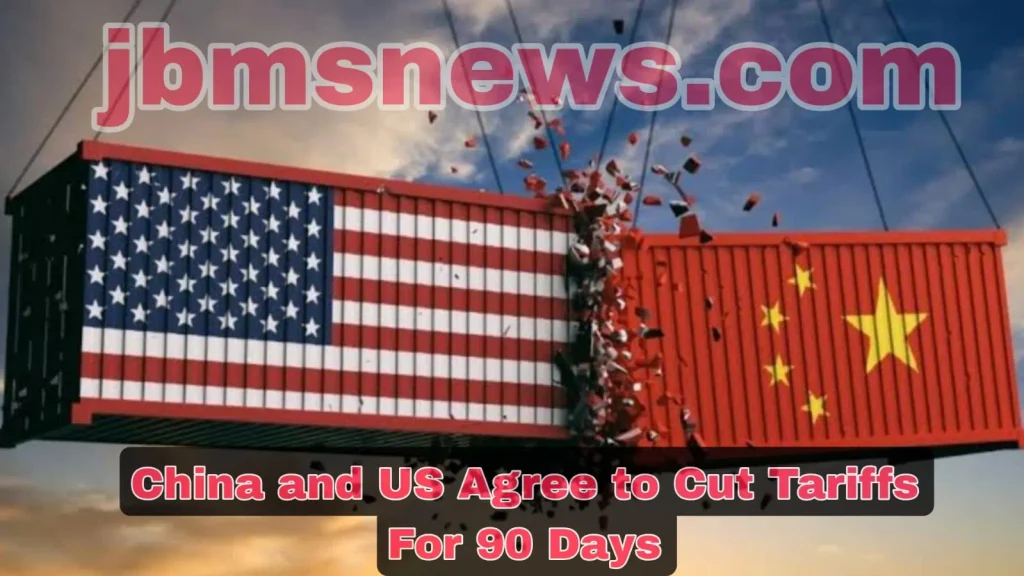
In a surprising yet hopeful development, the China and US Agree to Cut Tariffs for 90 Days. This temporary truce aims to ease trade tensions and give both nations time to negotiate a more permanent trade deal. The news was announced by the US Treasury Secretary and has already sparked conversations worldwide.
📰 What Happened?
During a public address, a key US official announced that:
- China and the US have agreed to lower tariffs for a period of 90 days.
- This agreement is temporary and designed to allow room for further trade negotiations.
- It impacts several countries indirectly, as shown on a chart displayed during the announcement.
This is seen as a step toward de-escalating the ongoing trade war that has affected global markets, business supply chains, and economic growth for years.
🌐 Why Is This Important?
The US-China trade war has been one of the biggest global economic issues in recent years. Both nations imposed billions of dollars in tariffs on each other’s goods, leading to:
- Higher prices for consumers
- Slower global economic growth
- Uncertainty for businesses worldwide
This 90-day pause signals a possible thaw in the economic cold war between the world’s two largest economies.
Read This : US Announces Trade Deal with China
🔍 Countries Mentioned
Though the agreement is between the US and China, other countries are also key players in global trade. The sign displayed by the US official mentioned:
- European Union
- Vietnam
- Taiwan
- Japan
- India
- South Korea
- Thailand
- Indonesia
These countries could be indirectly affected by the tariff reduction, depending on how global supply chains adjust during the 90-day period.
🤖 Important NLP (Natural Language Processing) Terms
To better understand news like this, it helps to know some key NLP terms:
- Named Entity Recognition (NER): Helps identify names like “China” and “US” in text.
- Sentiment Analysis: Analyzes whether a news article has a positive, negative, or neutral tone.
- Topic Modeling: Groups news into themes like “Trade” or “Tariffs.”
- Text Classification: Categorizes articles (e.g., this one is “Politics” or “Economy”).
These tools are often used in analyzing global news trends and investor sentiment.
❓FAQs
What is a tariff?
A tariff is a tax imposed on imported goods. It makes foreign products more expensive, aiming to protect local industries.
Why are tariffs a big deal?
Tariffs can lead to trade wars. They raise prices for everyday goods, hurt businesses, and can slow down economies.
How long will this agreement last?
The agreement is for 90 days, giving both countries time to negotiate a broader deal.
Who benefits from this deal?
Consumers may see lower prices on imported goods.
Businesses get relief from supply chain costs.
Global markets may see a rebound in investor confidence.
What happens after 90 days?
If negotiations go well, tariffs may be removed or reduced permanently. If not, tensions could rise again.
✅ Conclusion
The US and China agreeing to cut tariffs for 90 days is a major move toward calming a long-running trade conflict. While temporary, this window opens up possibilities for a more stable trade environment. Businesses, consumers, and investors will be watching closely to see if this leads to a longer-term solution.